Documentary Wedding Photography Meaning: A Couple's Guide
Discover the true documentary wedding photography meaning. Capture genuine moments and emotions that tell your unique wedding story.
July 4, 2026
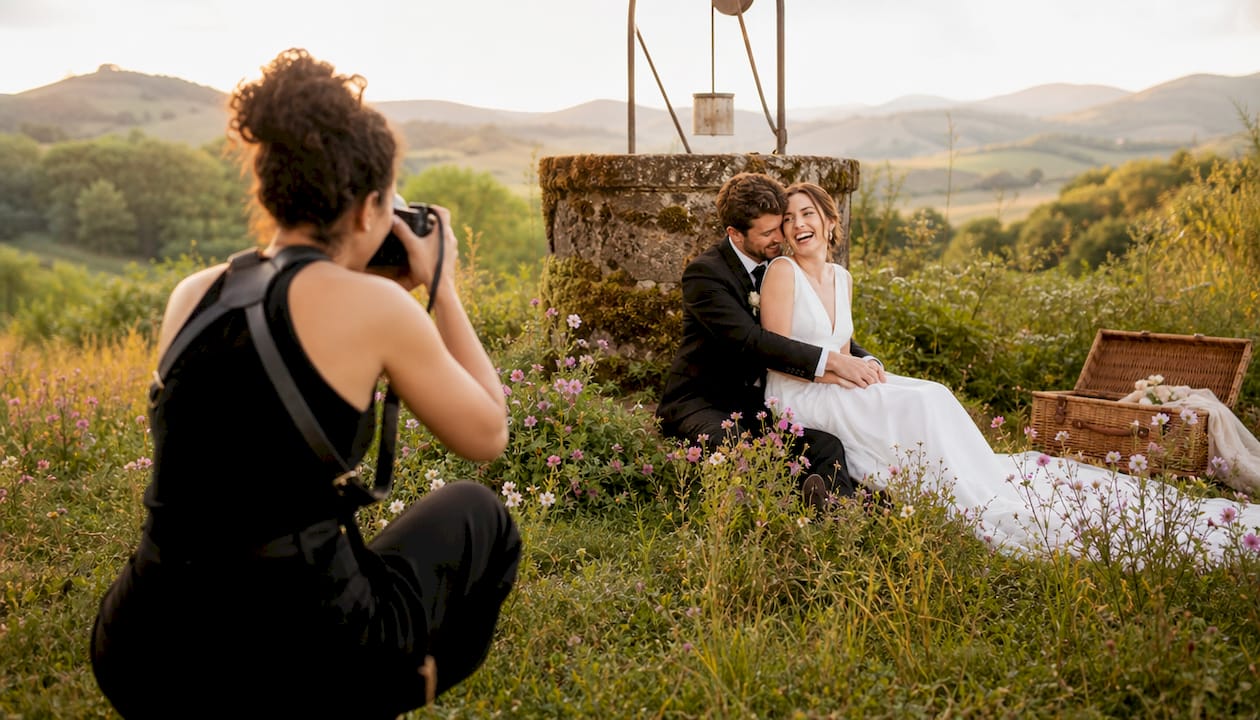
Documentary wedding photography is defined as a story-first approach that captures real, unscripted moments as they naturally unfold throughout your wedding day. Unlike posed portraiture or editorial setups, this style treats your wedding like a living document, recording genuine emotions, spontaneous interactions, and the quiet in-between moments that make your day uniquely yours. The industry often uses the terms documentary, photojournalistic, and candid interchangeably, but documentary specifically means story-first narrative coverage rather than isolated candid shots. Understanding the documentary wedding photography meaning helps you ask the right questions, evaluate portfolios with confidence, and choose a photographer whose work will feel like reliving your day, not just viewing a highlight reel.
What does documentary wedding photography meaning look like in practice?
Documentary wedding photography works because it prioritizes continuity over collection. A documentary photographer does not simply snap candid moments at random. They actively observe the room, anticipate emotional peaks, and reposition themselves to capture narrative continuity across every phase of the day.
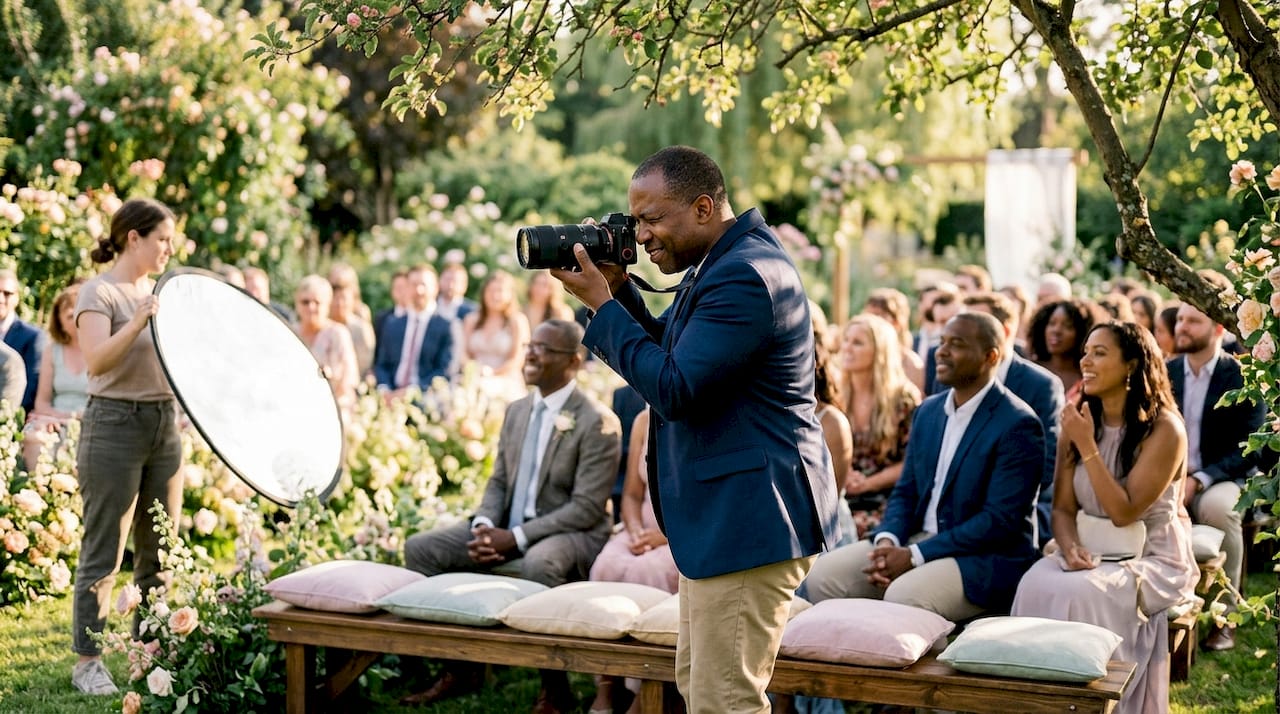
Think about the moment your parent sees you in your dress for the first time. A traditional photographer might ask everyone to pause and look at the camera. A documentary photographer has already moved to the angle that catches both your expression and your parent's tears simultaneously, without anyone noticing the camera is there. That is the difference.
The approach produces galleries that feel like reliving the actual wedding day, not a curated selection of the best-lit poses. Couples who choose this style often describe their galleries as emotionally overwhelming in the best way, because the images include moments they forgot happened.
Here is what a documentary gallery typically captures:
- Candid laughter between bridesmaids during getting-ready
- Tears during vows, including from guests in the background
- The quiet exhale a groom takes before walking out
- Children running between tables at the reception
- Spontaneous hugs and whispered conversations throughout the day
Pro Tip: Ask your photographer to describe how they move through the day. A true documentary photographer will talk about anticipating moments and adjusting position, not about directing guests or setting up shots.
How does documentary style differ from other wedding photography styles?
The confusion between wedding photography styles is real, and it costs couples clarity when they are trying to choose a wedding photographer. Each style has a distinct philosophy, and knowing the difference helps you match your personality to the right approach.
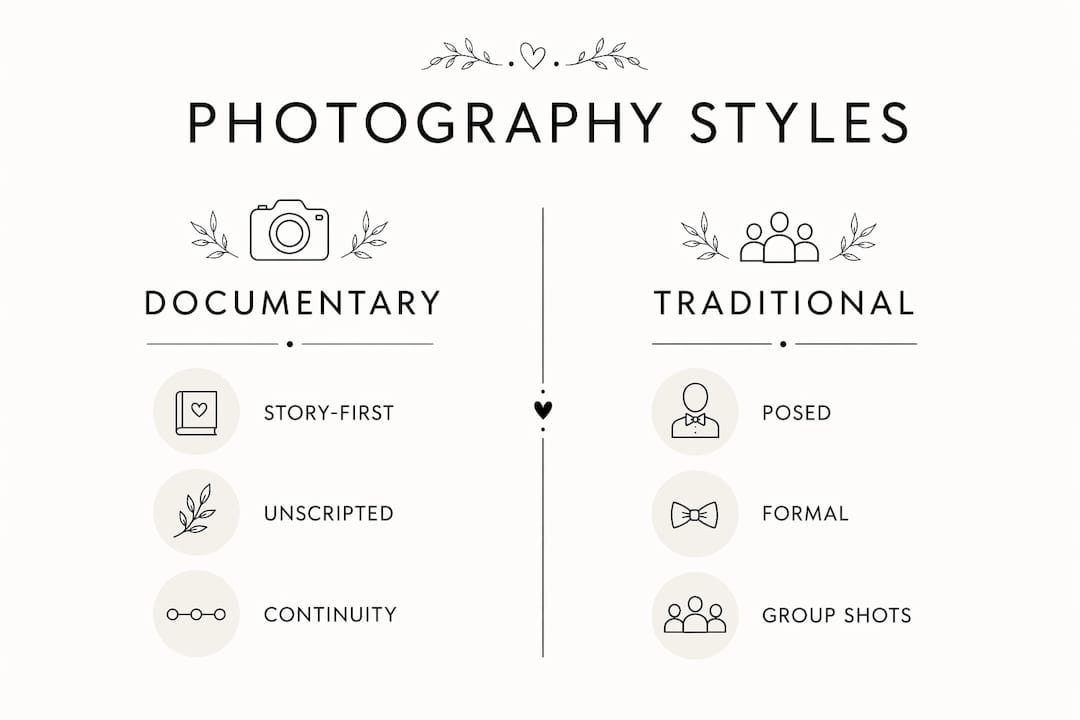
Photojournalistic style emphasizes minimal intervention, capturing moments exactly as they happen with almost no direction. Documentary style shares that commitment to authenticity but adds a layer of intentional storytelling. The photographer thinks about how each image connects to the next, building a coherent visual narrative rather than a collection of individual moments.
Candid photography is often the loosest category. It simply means unposed images, but it carries no obligation to tell a complete story. Editorial or fashion-influenced wedding photography sits at the opposite end of the spectrum. It prioritizes visual aesthetics, dramatic lighting, and carefully composed scenes, often with significant direction from the photographer.
Traditional wedding photography focuses on formal portraits, family groupings, and posed couple shots. It delivers predictable, polished results but rarely captures the emotional texture of the day.
| Style | Primary focus | Photographer role | What you get |
|---|---|---|---|
| Documentary | Story-first narrative | Active observer and anticipator | Full emotional story gallery |
| Photojournalistic | Moment capture | Minimal intervention | Strong individual images |
| Candid | Unposed images | Reactive shooter | Natural but unconnected shots |
| Editorial | Visual aesthetics | Director and stylist | Dramatic, fashion-forward images |
| Traditional | Formal portraits | Poser and organizer | Polished, predictable gallery |
A common misconception is that documentary photographers are passive. They are not. They make constant decisions about where to stand, when to move, and which moments to prioritize. The difference is that those decisions serve the story, not the pose.
Many photographers blend styles, which is fine. What matters is identifying the dominant approach in their portfolio. If a gallery feels like a magazine shoot, the photographer leans editorial. If it feels like a memory, the photographer leans documentary.
How to evaluate a documentary photographer's portfolio
Reviewing a portfolio is the most important step in how to choose a wedding photographer, and most couples do it wrong. They look at the hero shots, the dramatic sunset portraits, and the perfectly timed first-kiss images. Those images tell you almost nothing about storytelling ability.
The right way to evaluate a documentary style wedding photographer requires reviewing full, uncurated galleries. Reviewing 2–3 complete galleries from different weddings reveals far more than a curated highlight collection. Full galleries show you how a photographer handles the slow moments, the awkward transitions, and the low-light reception. Hero shots can be misleading. Full galleries reveal true skill.
Follow these steps when reviewing any documentary photographer's portfolio:
- Request complete galleries, not just highlights. Ask the photographer directly for two or three full wedding galleries. Any experienced documentary photographer will share them without hesitation.
- Check for narrative flow. Does the gallery move logically through the day? Can you feel the emotional arc from morning preparations to the final dance?
- Look for the in-between moments. Strong documentary galleries include quiet scenes, not just peak emotional moments. A grandmother sitting alone, a flower girl losing interest, a groomsman fixing a tie.
- Assess low-light and challenging conditions. Receptions are often dim. If a photographer's work falls apart in low light, their documentary coverage will have significant gaps.
- Read the wedding photo narrative across the gallery. Ask yourself: if you had never seen this wedding, would you understand the story from the images alone?
Pro Tip: Ask photographers if they can share an unedited or lightly edited sample set from a recent wedding. Editing choices reveal how a photographer sees the story, not just how well they shoot.
Ataviaweddings has built a portfolio of over 1,600 weddings across 16 years, which means their galleries reflect genuine storytelling consistency across a wide range of venues, lighting conditions, and wedding sizes. That depth of experience is what separates a reliable documentary photographer from someone who has had a few great days.
Benefits and real considerations of choosing documentary style
Documentary wedding photography delivers emotional authenticity that no other style matches. The core benefit is simple: your gallery will show you how your wedding actually felt, not how it was arranged to look.
Couples who choose documentary style often report feeling more relaxed on their wedding day because the photographer is not constantly pulling them aside for setups. Documentary photographers aim to be almost invisible, which means you spend more time being present and less time performing for the camera. That comfort shows up directly in the images.
Coverage details matter when setting expectations:
- A single documentary photographer typically delivers approximately 400–800 edited images from a full wedding day.
- Adding a second shooter increases output to approximately 600–1,200 images and is recommended for weddings with over 100 guests or multiple event locations.
- Delivery timelines typically run 6–8 weeks after the wedding date and should be specified in your contract.
One honest consideration: documentary style produces fewer formal posed portraits. If your family expects a complete set of traditional group shots, communicate that clearly with your photographer before the wedding. Most documentary photographers will accommodate a short portrait session while keeping the rest of the day unscripted. The key is setting that expectation in advance, not discovering the gap when you receive your gallery.
The storytelling approach also means your gallery will include images you did not know were being taken. That is the point. The most treasured images from documentary weddings are almost always the ones neither the couple nor the photographer planned.
Key Takeaways
Documentary wedding photography is the only style that captures the full emotional story of your wedding day, from the quiet moments to the peak celebrations, through continuous, unscripted observation.
| Point | Details |
|---|---|
| Core definition | Documentary style means story-first coverage of real, unscripted moments across the full wedding day. |
| Style distinctions | Documentary differs from photojournalistic, candid, and editorial styles by prioritizing narrative continuity over isolated images. |
| Portfolio evaluation | Review 2–3 full, uncurated galleries to assess storytelling consistency, not just highlight shots. |
| Coverage expectations | Single photographers deliver 400–800 images; second shooters increase output and are recommended for larger weddings. |
| Delivery timeline | Standard delivery runs 6–8 weeks post-wedding and should be confirmed in your contract. |
Why the story matters more than the label
After 16 years and over 1,600 weddings, I have watched couples spend enormous energy debating photography labels. Documentary versus photojournalistic. Candid versus lifestyle. The label debate almost always misses the point.
What actually matters is whether the final gallery tells an emotional, coherent story. I have seen portfolios labeled "documentary" that were essentially a collection of unrelated candid shots with no narrative thread. I have also seen photographers who never use the word documentary produce galleries that feel like the most honest record of a wedding day I have ever seen.
My honest advice: stop asking photographers what style they shoot and start asking them to show you a complete gallery from a recent wedding. Watch how the images move from one moment to the next. Ask yourself if you can feel the day. If the answer is yes, the label does not matter.
The other mistake I see couples make is assuming a documentary photographer requires no communication. That is wrong. The best documentary photographers want to know your priorities, your family dynamics, and the moments that matter most to you. That context helps them anticipate and position, which is exactly how great storytelling gets made.
— Atavia
How Ataviaweddings connects couples with authentic storytellers
Choosing a photographer whose work genuinely reflects the documentary style wedding you want takes more than browsing Instagram galleries.
Ataviaweddings brings over 16 years of experience and a portfolio of more than 1,600 weddings to every couple they work with. Their approach centers on genuine emotion and narrative continuity, which means every gallery they deliver reflects the real texture of your day. Couples consistently report 100% positive feedback on the experience, from the initial consultation through final delivery. If you are ready to work with photographers who treat your wedding as a story worth telling completely, explore Ataviaweddings to find the right fit for your day.
FAQ
What is documentary wedding photography?
Documentary wedding photography is a story-first style that captures real, unscripted moments and emotions as they naturally unfold throughout the wedding day. It prioritizes narrative continuity over posed or staged images.
How is documentary different from photojournalistic wedding photography?
Both styles capture moments as they happen, but documentary emphasizes storytelling through narrative continuity, while photojournalistic style focuses on minimal intervention and individual moment capture.
How many photos will I get from a documentary wedding photographer?
A single photographer typically delivers 400–800 edited images. Adding a second shooter can increase that range to 600–1,200 images, which is recommended for weddings with over 100 guests.
How long does it take to receive my wedding gallery?
Standard delivery timelines run 6–8 weeks after the wedding date. Confirm the exact timeline in your contract before signing.
What should I look for when reviewing a documentary photographer's portfolio?
Request 2–3 complete, uncurated galleries and assess whether the images tell a coherent emotional story across the full wedding day, not just the peak moments.
Recommended
Planning your wedding?
Atavia films and photographs weddings nationwide — local teams, no travel fees, and a $500 deposit reserves your date.
Reserve Your Date