Genuine Emotion in Wedding Photos: A Couple's Guide
Discover how to capture genuine emotion in wedding photos. Learn techniques to create authentic moments that you'll cherish for a lifetime.
July 8, 2026
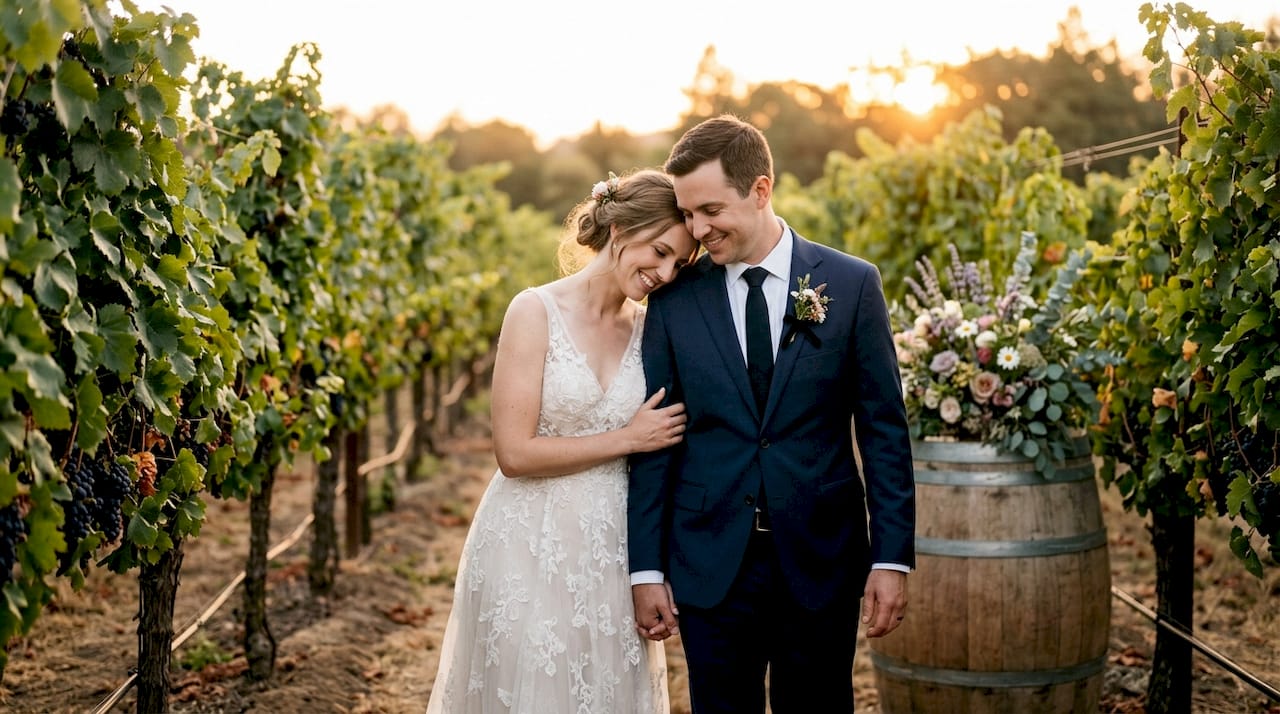
Genuine emotion in wedding photos is defined as the authentic expression of real feelings captured without forcing or staging reactions. These are the images couples return to decades later: the trembling hands during vows, the burst of laughter at the reception, the quiet glance exchanged before the first dance. Achieving this quality depends on two things working together. The photographer must use the right techniques, and the couple must feel relaxed enough to stop performing and start living. Ataviaweddings has built its entire approach around this principle across more than 1,600 weddings and 16 years of practice.
How do photographers capture genuine emotion during a wedding?
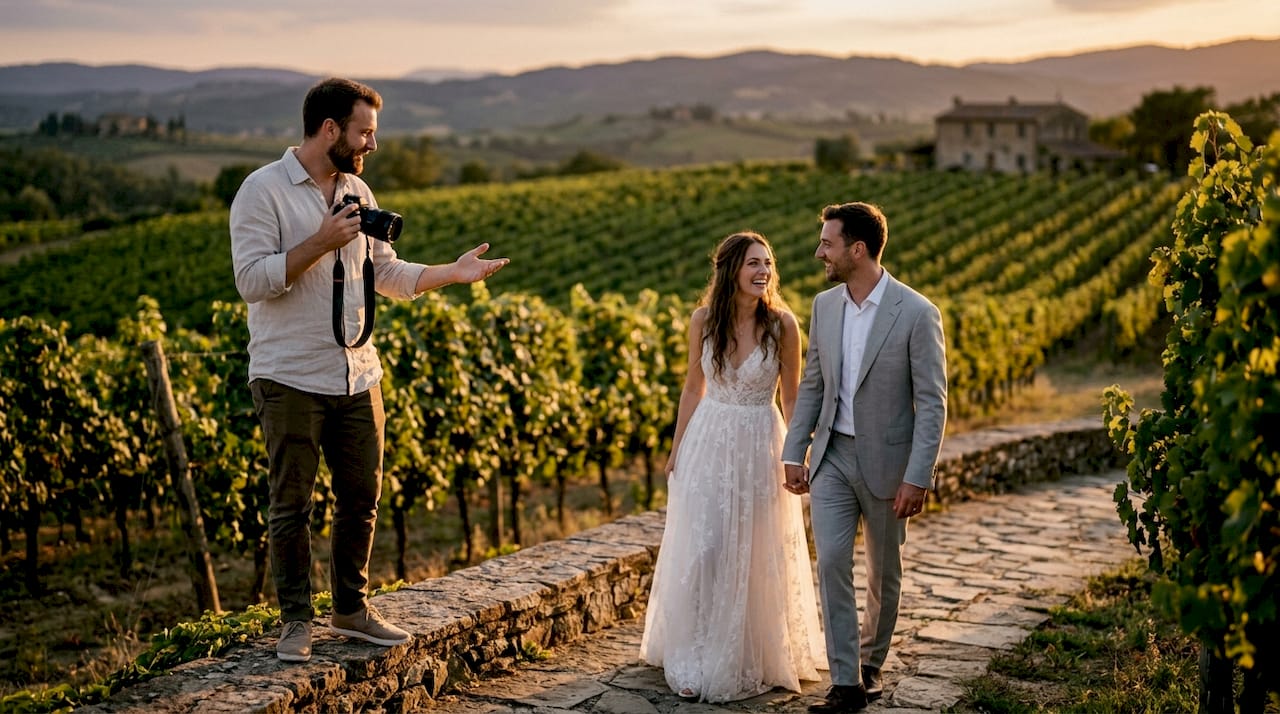
The most effective method for capturing authentic emotion is light prompting, also called micro-direction. This technique sits between full candid photography and traditional posed portraiture. Rather than saying "smile at the camera," a photographer using light prompting might say "walk toward the garden and tell each other something you're excited about." The result looks completely natural because the interaction is real.
Light prompting techniques increase the success of capturing authentic emotion by over 50% compared to traditional smile-and-pose methods. That gap exists because couples stop thinking about the camera and start thinking about each other.
Specific prompts that work consistently include:
- "Walk and talk" — couples stroll while speaking naturally, producing movement, laughter, and genuine glances
- "Share a memory" — asking one partner to whisper a meaningful moment to the other creates visible emotional reactions
- "Hold hands and breathe" — a simple grounding prompt that produces quiet, tender frames
- "Look at each other, not me" — redirects attention from the lens to the relationship
Timing and anticipation matter as much as the prompts themselves. The best candid photos come from photographers who are positioned and ready before moments peak, capturing reactions as they unfold rather than asking couples to repeat them. Recreated emotion almost never matches the original.
Micro-moments are where the real storytelling lives. A hand reaching across a table, a suppressed laugh during the ceremony reading, tears wiped away before the vows begin. These details connect images into a narrative that a single portrait never can.
Pro Tip: Tell your photographer two or three specific things that make you both laugh or feel deeply connected. A good photographer will weave those cues into the session naturally, without you realizing it.
What makes wedding photos feel real and not staged?
Authentic wedding photography is defined by three qualities: natural expressions, honest body language, and minimal camera awareness. When all three are present, the viewer feels like a witness rather than an audience member. Candid wedding photography creates imagery that makes viewers feel like a fly on the wall, observing real life without intrusion.
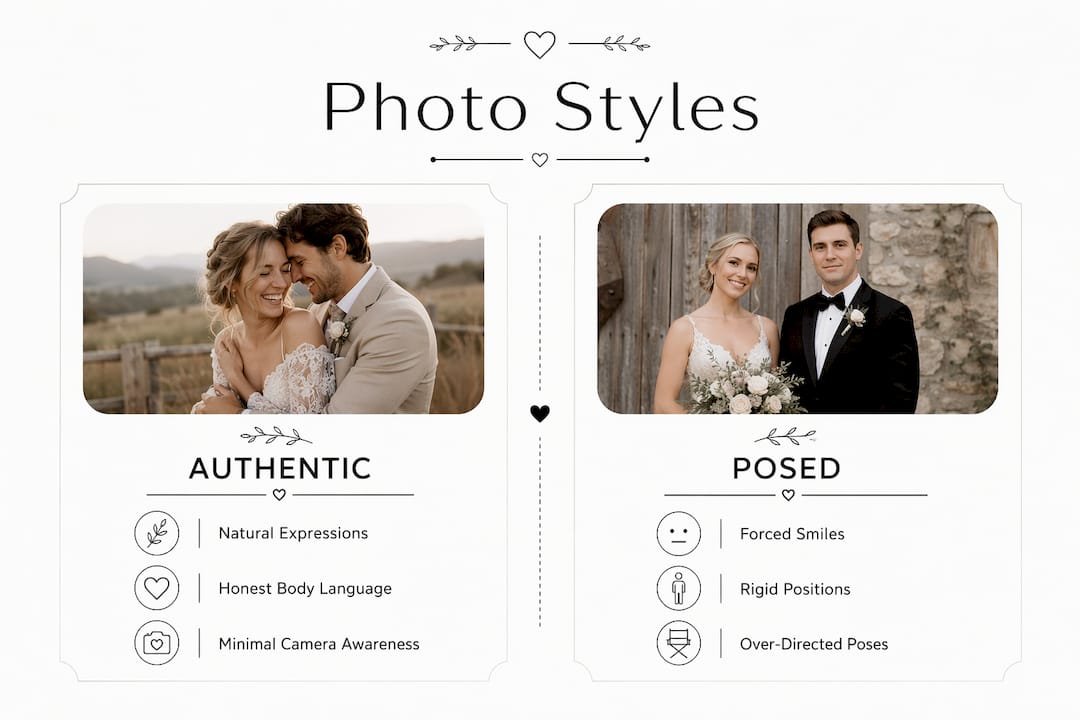
The biggest misconception couples carry into their wedding day is that "natural" means "no direction at all." That belief produces chaotic, unflattering images. Candid photography is not the absence of direction. It is light guidance that keeps moments coherent and flattering while preserving their emotional truth.
The table below shows how the two approaches differ in practice.
| Approach | What it produces |
|---|---|
| Light prompting (candid) | Natural expressions, real body language, minimal camera awareness |
| Over-directing (posed) | Stiff smiles, tense posture, obvious camera awareness |
| Zero direction (pure candid) | Unflattering angles, missed moments, inconsistent quality |
| Balanced micro-direction | Flattering frames that still feel completely unscripted |
Common pitfalls that kill authenticity include holding poses for too long, asking couples to repeat moments, using rigid scripts, and placing people in physically uncomfortable positions. Discomfort reads immediately in photographs. A tense jaw, a forced smile, and a stiff spine are impossible to hide.
The photographer's role is to manage the environment, not the emotions. Controlling light, background, and timing creates the conditions for real feeling to surface on its own.
How can couples prepare to show genuine emotion in their photos?
Couples who focus on their connection rather than the camera consistently produce more authentic images. Simple preparation like sharing memories or focusing on each other prevents stiffness and helps couples relax in front of the camera. The shift sounds small, but it changes everything visible in the final images.
Practical steps couples can take before and during the wedding day:
- Communicate your emotional style to your photographer before the wedding. Tell them whether you tend to be expressive or reserved, and what moments matter most to you.
- Do a short engagement session with your photographer. Familiarity with the person behind the lens removes the awkwardness that produces stiff photos.
- Focus on sensory details during the day. Notice the texture of your partner's hand, the sound of the music, the smell of the flowers. Presence produces emotion.
- Give yourself permission to cry, laugh, and react. Couples who suppress reactions to "look composed" lose their most powerful images.
- Arrive at each moment with intention. Before the first look, take three slow breaths together. That pause creates the stillness that produces powerful frames.
Understanding what emotional wedding photography actually involves helps couples set realistic expectations and prepare mentally for the day.
Pro Tip: The morning of your wedding, write your partner a short note about one specific thing you love about them. Read it privately before you see each other. That emotional state carries directly into your first photos together.
How does storytelling enhance genuine emotion in wedding photography?
Emotional storytelling in wedding photography is the practice of sequencing images to create a narrative arc rather than a collection of isolated moments. A single portrait of a bride is beautiful. A sequence showing her reading her partner's vows, covering her mouth, and reaching for her mother's hand tells a story that resonates for generations.
Micro-moments such as subtle eye contact, hands reaching, and spontaneous laughter create powerful emotional storytelling beyond what posed portraits can achieve. These small gestures are the connective tissue between the big moments every couple expects to capture.
Timing and patience are the two skills that separate good storytelling from great storytelling. A photographer who moves too quickly misses the reaction that follows the reaction. The second tear, the exhale after the kiss, the look exchanged between parents. Those secondary moments often carry more emotional weight than the primary event.
Photo sequences that work particularly well include the progression from anticipation to reaction during the first look, the arc from ceremony nerves to reception joy, and the quiet moments between events when couples are simply together without an audience. Wedding storytelling examples show how these sequences translate into visual narratives that feel complete rather than fragmented.
The photojournalistic wedding style applies this storytelling logic most directly, treating the wedding day as a documentary event rather than a photo opportunity. The result is a body of work that reads like a film rather than a slideshow.
Key Takeaways
Genuine emotion in wedding photos requires light prompting, photographer patience, and couple presence working together to produce images that feel real and last a lifetime.
| Point | Details |
|---|---|
| Light prompting beats posing | Gentle cues like "walk and talk" produce natural emotion over 50% more effectively than posed methods. |
| Candid means guided, not uncontrolled | Zero direction produces unflattering results; micro-direction keeps moments honest and flattering. |
| Couple preparation matters | Sharing memories, doing an engagement session, and staying present all reduce stiffness in photos. |
| Micro-moments carry the story | Subtle gestures like a hand reaching or a suppressed laugh build the emotional narrative between big moments. |
| Storytelling requires sequencing | A series of images showing emotional progression tells a far more powerful story than any single portrait. |
What I've learned after 1,600 weddings about real emotion
After photographing more than 1,600 weddings over 16 years, the pattern is clear. The couples who get the most emotionally powerful images are not the most photogenic. They are the most present.
The biggest mistake I see couples make is treating the photography as a performance. They tighten up, watch the lens, and wait to be told what to do. The moment they stop performing and start experiencing, the images change completely. A laugh becomes real. A touch becomes tender. The camera disappears.
Light prompting is the tool that makes this shift happen faster. When I ask a couple to share a memory or walk together without looking at me, they forget I exist within about 90 seconds. That's when the real work begins.
Imperfections are not problems to fix. A smeared tear, a crooked veil, a laugh that scrunches the face completely. These are the details that make an image irreplaceable. Perfect photos are forgettable. Honest photos are not.
The couples who communicate their emotional priorities before the wedding always leave with stronger images. Not because I change what I do, but because I know where to point the camera when it matters most.
— Atavia
Ataviaweddings' approach to capturing real feeling on your wedding day
Ataviaweddings brings over 16 years of experience and a portfolio of more than 1,600 weddings to every couple it works with. The focus has always been on artistry and authenticity, using light prompting and candid techniques to capture the moments that feel true rather than staged.

Every couple receives personalized guidance on how to feel comfortable in front of the camera, from the engagement session through the final reception shot. The result is a visual narrative that reflects who you actually are on your wedding day, not a performance of it. Ataviaweddings' wedding photography and videography packages are designed to preserve every layer of your story, from the quiet morning moments to the last dance. Couples consistently report 100% satisfaction, not because every image is perfect, but because every image is real.
FAQ
What is genuine emotion in wedding photography?
Genuine emotion in wedding photography refers to authentic, unforced expressions captured during real moments of connection. It is the opposite of staged smiling and relies on light prompting, timing, and couple comfort to produce honest images.
How does light prompting work in wedding photos?
Light prompting uses gentle verbal cues, such as "walk and talk" or "share a memory," to help couples interact naturally while the photographer captures the resulting reactions. This technique produces authentic emotion over 50% more effectively than traditional posed methods.
What is the difference between candid and posed wedding photography?
Candid wedding photography uses minimal direction to capture natural interactions, while posed photography places couples in specific positions and expressions. The most effective approach combines both: light guidance that keeps images flattering without sacrificing emotional truth.
How can couples feel more natural in front of the camera?
Couples feel more natural by doing an engagement session with their photographer, focusing on each other rather than the lens, and sharing specific memories or prompts during the shoot. Preparation and familiarity with the photographer reduce stiffness significantly.
Why do micro-moments matter in wedding photos?
Micro-moments, such as a hand reaching across a table or a suppressed laugh, build the emotional narrative between the major events of the day. These small gestures contribute more to storytelling than posed portraits because they reveal how couples actually feel rather than how they think they should look.
Recommended
Planning your wedding?
Atavia films and photographs weddings nationwide — local teams, no travel fees, and a $500 deposit reserves your date.
Reserve Your Date