How the Wedding Photo Editing Process Works in 2026
Discover how the wedding photo editing process works in 2026. Learn the stages that transform your raw images into stunning final photos.
July 10, 2026
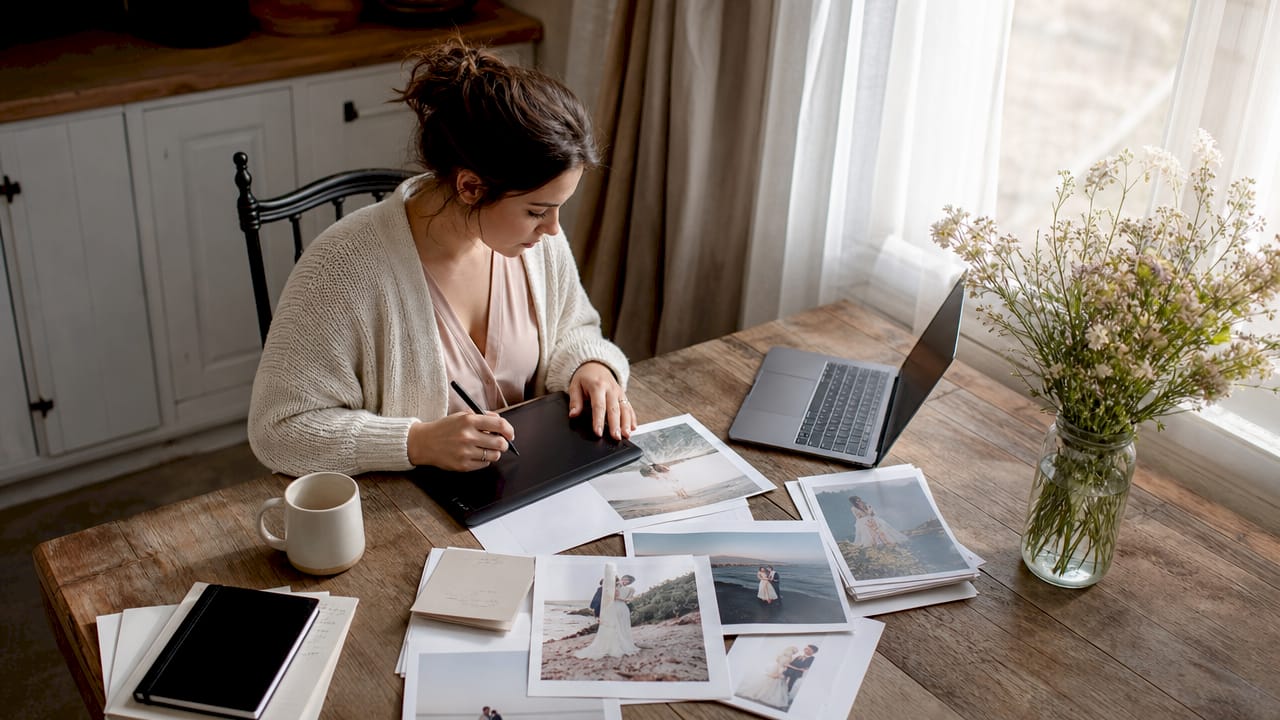
The wedding photo editing process is a structured, multi-stage workflow that transforms thousands of raw image files into a polished, curated gallery ready for print and display. Understanding how this process works helps you set realistic expectations, ask better questions, and recognize the craftsmanship behind every image you receive. A typical eight-hour wedding generates between 10,000 and 15,000 RAW files, and your photographer must work through every single one before you see a finished photo. The process demands both technical skill and artistic judgment at every step.
How does the wedding photo editing process work, stage by stage?
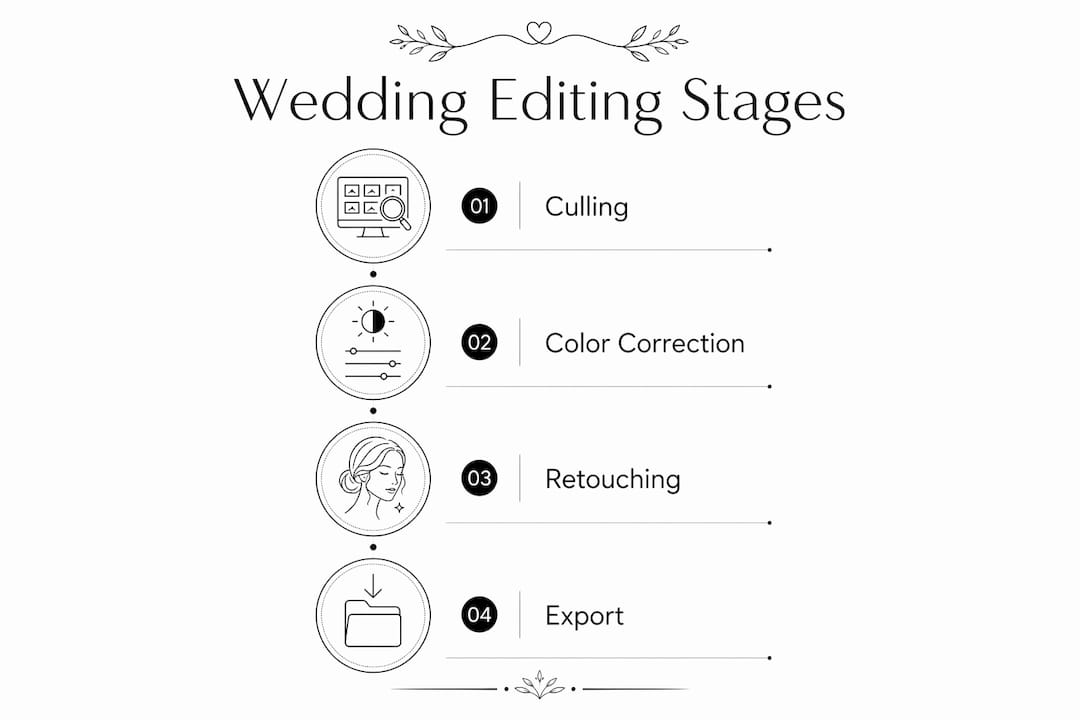
Wedding photo editing follows four structured stages: culling, color correction, retouching, and final export. Each stage serves a distinct purpose, and skipping or rushing any one of them shows up in the final gallery.
Stage 1: Culling
Culling is the selection phase. The photographer reviews every raw file and identifies the 500–800 strongest images from the full shoot. This is not a quick scan. Each photo gets evaluated for sharpness, exposure, composition, and emotional impact. Professional editors avoid making artistic edits during culling because mixing selection and editing creates decision fatigue and slows the entire workflow. The goal is a clean, focused shortlist before any creative work begins.
Stage 2: Color correction
Color correction adjusts exposure, white balance, contrast, and shadow detail across every selected image. Wedding venues present some of the most challenging lighting conditions in photography: candlelit ceremonies, mixed indoor and outdoor transitions, and flash-heavy receptions all require different correction approaches. Consistency in color grading is achieved by anchoring edits to one or two expertly adjusted photos per lighting condition, then applying those settings across similar shots. This keeps the gallery feeling cohesive rather than patchy.
Stage 3: Retouching
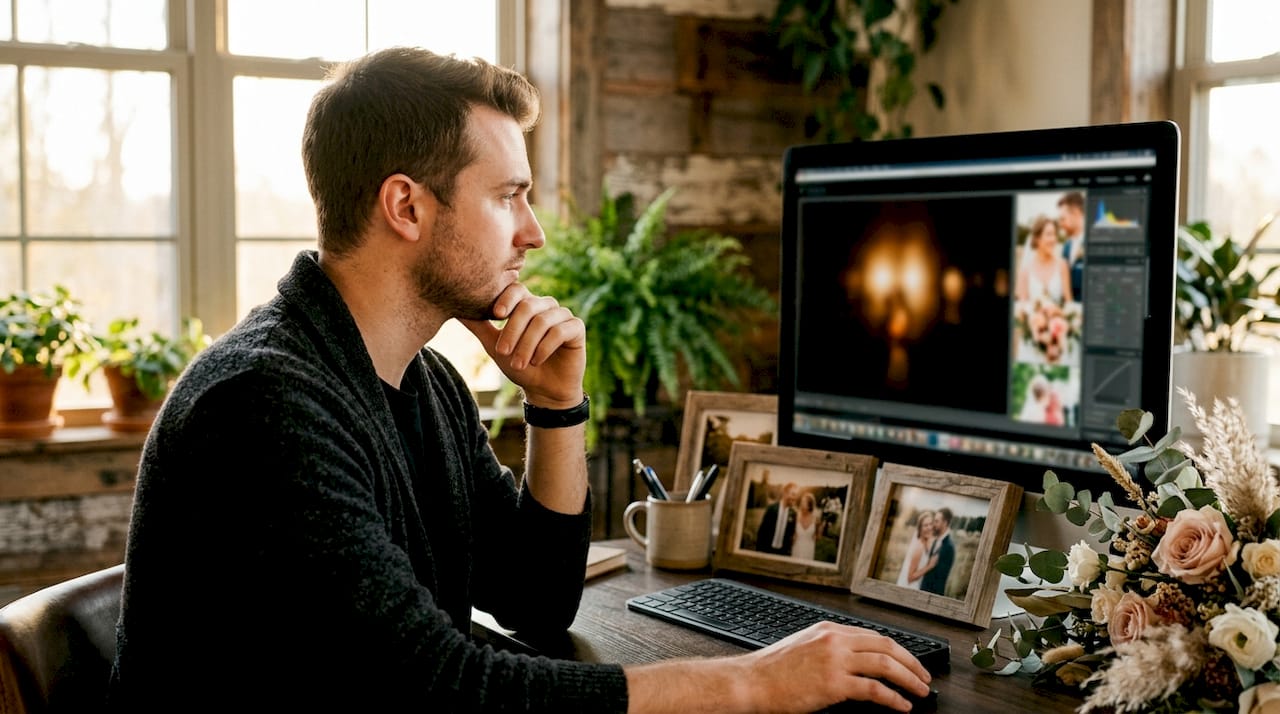
Retouching is the most time-intensive stage and applies only to key images. Retouching is limited to select photos intended for print or prominent display. Applying detailed retouching to every image in a 700-photo gallery is impractical and unnecessary. Portrait retouching alone takes 4–8 hours per wedding when done properly.
Stage 4: Export and gallery delivery
The final stage prepares separate image sets for different uses: high-resolution files for printing, compressed versions for web galleries, and optimized crops for social media. Final quality control includes checks for color drift, cropping consistency, retouching accuracy, and gallery sequencing. Only after passing this review does the gallery go live for you to access.
Pro Tip: Ask your photographer how they organize their delivery. A well-structured gallery with labeled folders for ceremony, portraits, and reception makes it far easier to find the images you want to print.
How do AI tools speed up the editing workflow?
Technology has changed the pace of wedding photo editing without replacing the human judgment behind it. The most significant shift is in culling.
- AI-powered culling tools reduce review time from 4–8 hours down to approximately 20–60 minutes by automatically flagging closed eyes, motion blur, and duplicate frames.
- Batch editing in Lightroom, using synced presets and Smart Previews, cuts editing time from over five hours to roughly 2–2.5 hours on a 900-image wedding.
- Editing one hero image fully before syncing edits across a group prevents inconsistent color grading and speeds up batch processing.
- Presets provide a consistent starting point per lighting scenario but always require manual fine-tuning on individual images.
The limit of AI is clear at the retouching and sequencing stages. AI handles repetitive technical tasks effectively, but emotional and narrative choices remain a manual, human-driven process. Deciding which tearful moment to feature, how to sequence the first dance, and which portrait best captures a couple's connection requires a trained eye, not an algorithm.
Pro Tip: When reviewing your photographer's portfolio, look for consistency across an entire gallery, not just the highlight shots. Consistent color and tone across 600+ images signals a disciplined batch editing workflow.
What techniques do professional editors use to preserve authenticity?
The most common mistake in wedding photo retouching is over-editing. Heavy global skin smoothing creates what editors call "plastic skin," where texture disappears and faces look artificial. Professional retouching avoids this by working locally and selectively.
- Dodging and burning lighten and darken specific areas of a portrait to sculpt dimension without altering skin texture.
- Frequency separation splits texture from tone, allowing editors to even out skin color while keeping pores and natural detail intact. This technique is applied sparingly, not as a default setting.
- Targeted blemish removal addresses temporary skin issues like a wedding-day breakout without permanently altering a person's features.
- Background distraction removal cleans up stray objects, exit signs, or unflattering background elements that the camera captured but the eye ignored in the moment.
The goal of professional retouching techniques is to make the image look like the best version of what was actually there, not a digitally constructed version of something else. Couples who look back at their photos in 20 years should recognize themselves, not a filtered approximation.
A well-edited portrait uses local adjustments rather than global smoothing to maintain identity and ensure the couple feels genuinely represented. This is the standard Ataviaweddings applies across every image in its post-production workflow, drawing on over 16 years of experience across more than 1,600 weddings.
Why does wedding photo editing take several weeks to deliver?
Delivery timelines confuse many couples because the wait feels long relative to the wedding day itself. The reality is that editing takes 20–36 hours per wedding, and most photographers are managing multiple weddings in their queue at any given time.
| Factor | Typical range | What it means for you |
|---|---|---|
| Industry standard delivery | 4–6 weeks | The baseline for a single wedding with normal volume |
| Peak season delivery | 8–12 weeks | Summer and fall bookings create editing backlogs |
| Total editing hours per wedding | 20–36 hours | Reflects culling, correction, retouching, and export combined |
| Portrait retouching time | 4–8 hours | Applied only to key images, not the full gallery |
| Sneak peek delivery | 48–72 hours | A small set of edited highlights sent shortly after the wedding |
Professional photographers often shoot multiple weddings per month. Their editing workflow must adapt to workload peaks without dropping delivery standards. A photographer who promises two-week turnaround during peak season is likely cutting corners somewhere in the process.
Sneak peek images, typically 10–20 photos, arrive within 48–72 hours and give you a preview of the style and quality before the full gallery is complete. The full delivery follows once every stage of the workflow is finished and quality-checked.
Organized digital folder systems and 3-2-1 backup strategies protect your images throughout the editing process. Folders sorted by date, client, and camera source reduce the risk of data loss and keep the workflow moving efficiently.
Key Takeaways
The wedding photo editing process requires four distinct stages, 20–36 hours of skilled labor, and careful quality control before a single image reaches your gallery.
| Point | Details |
|---|---|
| Four-stage workflow | Culling, color correction, retouching, and export each serve a distinct purpose. |
| Volume and time | An eight-hour wedding generates up to 15,000 raw files, culled to 500–800 final images. |
| AI accelerates, not replaces | AI tools cut culling time to under one hour, but human judgment drives retouching and sequencing. |
| Retouching is selective | Detailed retouching applies only to key portrait images, not every photo in the gallery. |
| Realistic delivery window | Expect 4–6 weeks standard, or 8–12 weeks during peak wedding season. |
What editing 1,600 weddings taught me about this craft
Most couples assume editing is the easy part. Shoot the photos, run a filter, send the gallery. After working through more than 1,600 weddings at Ataviaweddings, I can tell you the opposite is true. The editing room is where a wedding story either comes together or falls apart.
The discipline that matters most is keeping culling and editing completely separate. The moment you start tweaking an image during the selection phase, you lose your rhythm and your objectivity. I have seen photographers spend eight hours on culling alone because they kept stopping to adjust. That is a workflow problem, not a quality problem.
Screen fatigue is real and it affects quality in ways that are hard to notice in the moment. Staring at screens too long causes color drift, where your eye adjusts to a slight cast and stops seeing it as a problem. Scheduled breaks are not optional. They are part of delivering accurate color.
The part I find most rewarding is the sequencing. Arranging 700 images so they tell a coherent story, with pacing and emotional arc, is genuinely creative work. A gallery that flows well feels like watching a film. One that does not feels like a contact sheet. That difference is entirely in the editing, and it is entirely human.
Transparency with couples about timelines and what retouching actually covers prevents most of the frustration I have seen. When you understand that your photographer is spending 30+ hours on your images after the wedding day, the wait makes sense.
— Atavia
How Ataviaweddings delivers polished wedding galleries
Ataviaweddings brings over 16 years of post-production experience to every wedding it photographs, applying the same four-stage workflow described here to each gallery it delivers.
Every couple receives a fully edited gallery with consistent color grading, selective retouching on key portraits, and a final quality check before delivery. Ataviaweddings' wedding photography packages include online gallery access with print ordering built in, so your images are ready to display the moment they arrive. The team's 100% positive feedback record reflects a commitment to both image quality and clear communication throughout the editing process. If you want to understand more about what professional editing delivers for your final gallery, Ataviaweddings is ready to walk you through every step.
FAQ
How many photos will I receive from my wedding?
Most professional photographers deliver 500–800 edited images from an eight-hour wedding, culled from 10,000–15,000 raw files captured on the day.
How long does wedding photo editing take to complete?
The industry standard delivery window is 4–6 weeks, with timelines extending to 8–12 weeks during peak wedding seasons due to editing backlogs.
What is the difference between color correction and retouching?
Color correction adjusts exposure, white balance, and contrast across all selected images. Retouching is detailed work applied only to key portrait images, covering skin, background distractions, and fine detail.
Do photographers retouch every wedding photo?
No. Detailed retouching applies only to select images intended for print or display. Applying full retouching to every photo in a large gallery is impractical and not standard practice.
What are sneak peek photos?
Sneak peek photos are a small set of 10–20 edited highlights delivered within 48–72 hours of the wedding, giving couples a preview before the full gallery is complete.
Recommended
Planning your wedding?
Atavia films and photographs weddings nationwide — local teams, no travel fees, and a $500 deposit reserves your date.
Reserve Your Date