Photojournalistic Wedding Style Explained for Couples
Discover the photojournalistic wedding style explained. Capture genuine moments effortlessly on your big day with expert insights and tips.
June 30, 2026
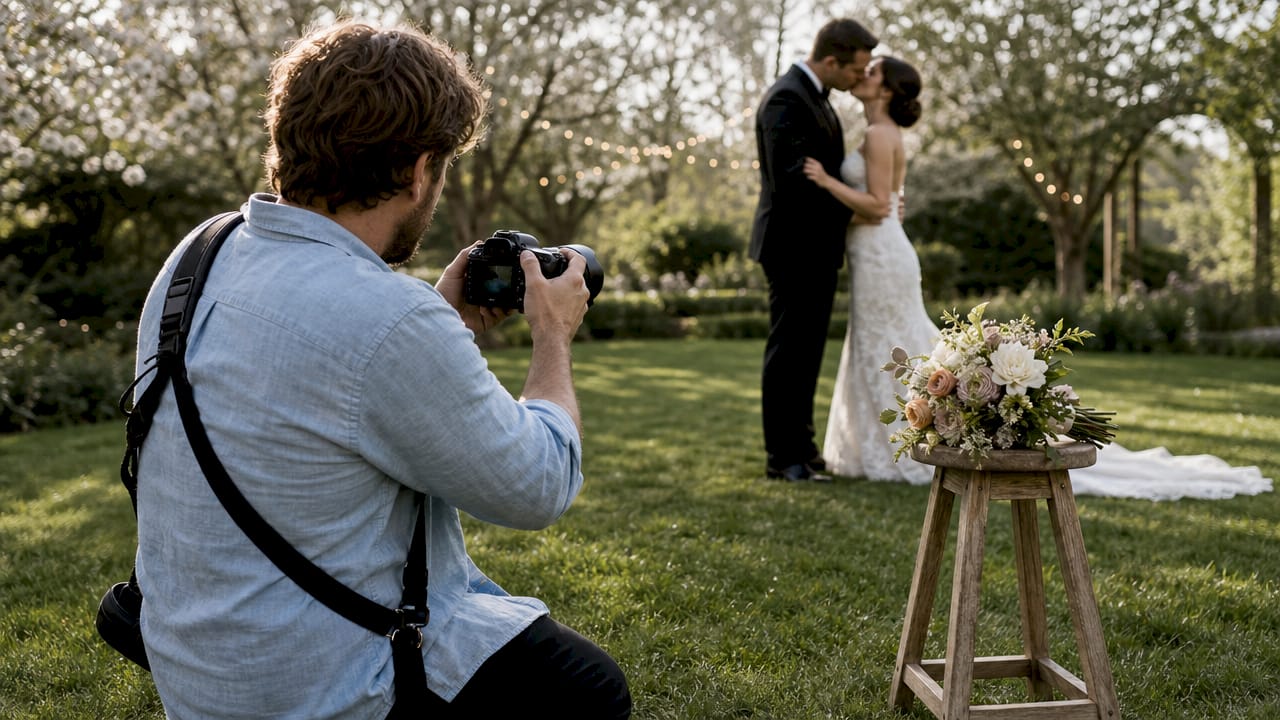
Photojournalistic wedding photography is defined as the practice of capturing real, unposed moments as they naturally unfold, with no direction or staging from the photographer. Also called documentary or reportage photography, this style treats your wedding day as a living story worth recording honestly. Couples who choose this approach value genuine emotion over perfect compositions and staged shots. Ataviaweddings has built its entire approach around this philosophy, drawing on over 16 years of experience and more than 1,600 weddings to deliver images that feel true to the day.
What is photojournalistic wedding style, and how does it work?
Photojournalistic wedding photography captures the wedding day as it unfolds without direction or posing, focusing on genuine, spontaneous moments. The photographer operates like a journalist at a news event: observing, anticipating, and reacting without rearranging the scene. Nothing is set up. Nothing is repeated for the camera. The result is a gallery that reads like a visual diary of your actual day.
The style goes by several names in the industry. "Documentary wedding photography" and "reportage photography" describe the same core approach. Some photographers use "candid wedding photography" loosely, but photojournalism carries a higher standard. It demands not just candid shots but a coherent narrative arc across the full day, from getting ready through the last dance.
The photographer's role is fundamentally observational. They move through your wedding like a guest who happens to carry a camera, staying close enough to capture emotion but far enough away to avoid influencing it. That restraint is what makes the images feel real years later.
How does photojournalistic style differ from other wedding photography styles?
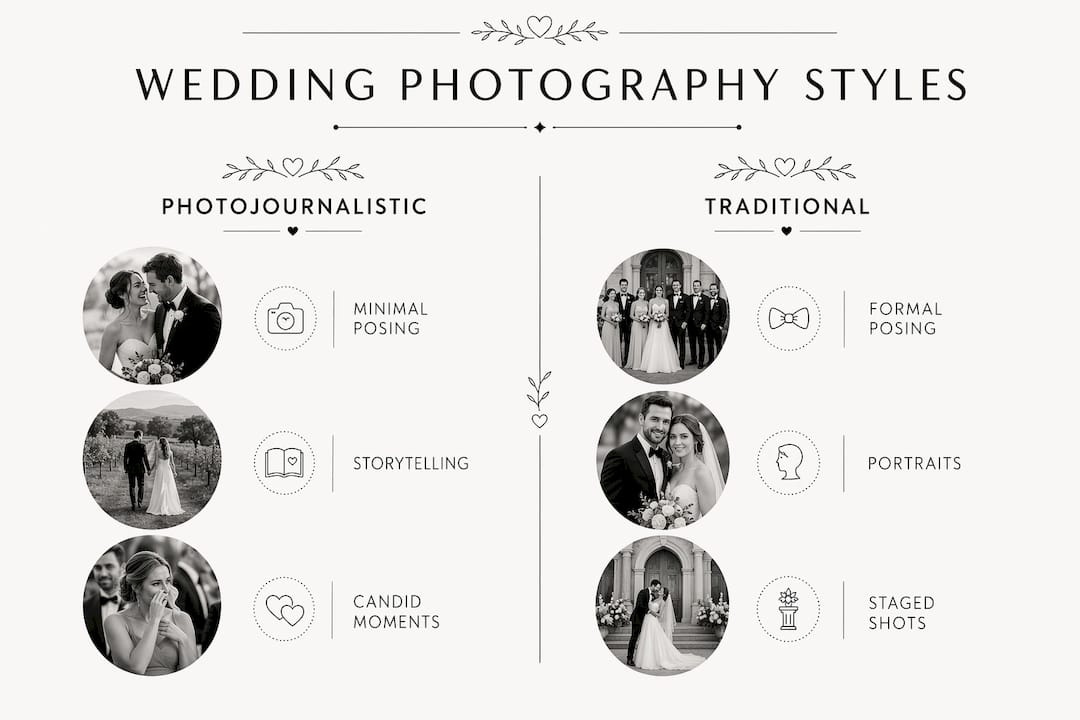
Understanding the differences between wedding photography styles helps you make a confident choice. The table below compares the four most common approaches.
| Style | Photographer involvement | Posing | Primary goal |
|---|---|---|---|
| Photojournalistic | Minimal, observational | None | Authentic storytelling |
| Candid | Low | Minimal | Natural-looking moments |
| Fine art | Moderate to high | Selective | Artistic, composed images |
| Traditional/posed | High | Extensive | Formal portraits and groups |
Traditional posed photography delivers polished family portraits and bridal party lineups. Fine art wedding photography emphasizes artistic composition, often using dramatic lighting and carefully chosen locations to create images that look like editorial spreads. Candid photography sits closer to photojournalism but lacks the storytelling discipline. Photojournalistic style prioritizes naturalness and spontaneity over staged perfection, which is what separates it from all three.
Many modern photographers blend documentary coverage with fine art portraiture. They shoot the ceremony and reception in a pure photojournalistic mode, then carve out 20 to 30 minutes for intentional portraits with artistic lighting. This blend gives couples both honest storytelling and beautiful formal images.
Pro Tip: Ask any photographer you interview to show you a full wedding gallery, not just their highlight reel. A photojournalistic photographer's gallery should tell a complete story from morning to night, not just showcase their 20 best shots.
What techniques define photojournalistic wedding photography?
A skilled wedding photojournalist observes, anticipates, and reacts in real time to capture authentic moments without interfering. This requires a specific set of skills that go well beyond knowing how to operate a camera.
The most important skill is anticipation. A photojournalistic photographer reads the room constantly. They position themselves near the flower girl before the processional begins, knowing she will likely do something memorable. They watch the groom's face as the bride walks down the aisle, not the bride. They notice a grandmother reaching for a tissue and frame the shot before the tear falls.
Emotional awareness is equally critical. The photographer must recognize which moments carry weight and move quickly without disrupting them. A spontaneous burst of laughter between bridesmaids, a quiet moment between a father and daughter before the ceremony, an unscripted kiss during the first dance: these are the images that couples treasure most.
The core techniques photojournalistic photographers rely on include:
- Fly-on-the-wall positioning: Staying at the edges of activity to observe without being seen
- Continuous shooting bursts: Capturing sequences of action to preserve the exact peak moment
- Available light mastery: Using natural and ambient light to avoid disruptive flash
- Wide and telephoto lens pairing: Wide lenses for context, telephoto lenses for intimate close-ups from a distance
- Pre-visualization: Mentally mapping likely emotional moments before they happen
- Silent shutter mode: Reducing camera noise to stay unobtrusive during vows and quiet moments
Pro Tip: When reviewing a photographer's portfolio, look for images where subjects are clearly unaware of the camera. If everyone is looking at the lens, the photographer is directing, not documenting.
How should couples prepare for photojournalistic wedding photography?
Choosing this style changes how you interact with your photographer on the wedding day. The less you think about the camera, the better your images will be. That sounds simple, but it takes some preparation.
Start by vetting photographers carefully. A genuine photojournalistic photographer will have a portfolio full of unguarded, emotionally rich images. Strong photojournalistic galleries often reveal intimate moments couples were unaware occurred during their wedding day. If you see a gallery and think "I didn't know that happened," the photographer is doing their job correctly.
Use this numbered checklist when selecting your photographer:
- Request a full wedding gallery. Ask to see every image from a single wedding, not a curated selection. This shows consistency and storytelling depth.
- Ask about their approach to direction. A true photojournalist will say they give minimal to no direction during the ceremony and reception.
- Discuss style blending. Ask whether they incorporate any fine art portraits and how they balance the two approaches.
- Review their low-light work. Receptions and indoor ceremonies test a photographer's technical skill. Poor low-light images signal limited experience.
- Confirm their timeline approach. Ask how they handle the wedding day schedule without rushing or staging moments.
- Check their experience level. Full-day documentary coverage from experienced photographers typically costs between $4,000 and $10,000 or more. That range reflects real differences in skill, equipment, and editing quality.
On the wedding day itself, the best thing you can do is be present. Talk to your guests, laugh freely, and forget the photographer is there. Genuine moments happen when you stop performing for the camera.
How do photographers balance photojournalism with fine art portraits?
Most couples want both: honest documentation of their day and a set of beautiful formal portraits. The good news is that these goals are not in conflict. Many modern photographers blend documentary coverage for ceremonies and events with fine art or editorial photography for portraits.
The typical structure works like this. The photographer shoots the getting-ready period, ceremony, cocktail hour, and reception entirely in documentary mode. Then, usually around golden hour, they pull the couple aside for 20 to 30 minutes of intentional portrait work. During this window, the photographer uses composition, light, and location to create images with fine art quality while still encouraging natural interaction rather than stiff posing.
The table below shows how the three main approaches compare in practice.
| Approach | Style | Photographer role | Typical deliverables |
|---|---|---|---|
| Pure photojournalistic | Fully documentary | Observer only | Candid story gallery |
| Blended | Documentary plus fine art portraits | Observer plus brief director | Story gallery plus artistic portraits |
| Fine art focused | Primarily editorial | Active director | Styled, composed portrait set |
The blended approach suits most couples best. It delivers the wedding photo narrative that photojournalism provides while also giving you the formal portraits that family members expect. When hiring, tell your photographer explicitly which balance you want. A ratio like "90% documentary, 10% portraits" gives them a clear brief.
Lighting during portrait sessions does not have to feel artificial. Skilled photographers use window light, open shade, and golden hour sun to create beautiful images without flash or reflectors. The goal is to make the portrait session feel like a natural extension of the day, not a separate photo shoot.
Key Takeaways
Photojournalistic wedding photography delivers the most authentic record of your wedding day because it captures real emotion without posing, staging, or direction.
| Point | Details |
|---|---|
| Core definition | Photojournalistic photography documents the day as it happens, with no posing or direction from the photographer. |
| Style differences | It differs from fine art and traditional styles by prioritizing spontaneous storytelling over artistic composition or formal portraits. |
| Photographer skills | Anticipation, emotional awareness, and unobtrusive technique are the defining skills of a strong wedding photojournalist. |
| Vetting process | Always request a full wedding gallery and ask direct questions about how much direction the photographer gives. |
| Blended approach | Most couples benefit from a mix of documentary coverage and a short fine art portrait session during golden hour. |
Why I believe photojournalistic photography is the most honest gift you can give yourselves
After working with couples across more than 1,600 weddings, I have seen what images they return to years later. It is almost never the formal portraits. It is the shot of the groom's father wiping his eyes during the vows. It is the flower girl spinning in her dress when she thought no one was watching. It is the grandmother and the bride sharing a quiet laugh in the hallway before the ceremony began.
Photojournalistic photography is harder to execute than posed work. There is no second chance. You cannot ask a moment to repeat itself. That pressure forces photographers to be fully present, technically prepared, and emotionally attuned in a way that staged work simply does not require.
The couples who get the most from this style are the ones who trust the process. They stop worrying about how they look and start living their day. That shift in mindset is visible in the images. You can see the difference between a couple performing for the camera and a couple genuinely absorbed in the best day of their lives.
Authenticity in wedding photography is not a trend. It is the only approach that will still feel true in 20 years. Posed images date quickly. Real moments do not.
— Atavia
Ataviaweddings' approach to documentary wedding photography
Ataviaweddings specializes in the kind of emotional wedding photography that photojournalistic style makes possible. With over 16 years of experience and a portfolio spanning more than 1,600 weddings, the team brings both technical skill and genuine emotional intelligence to every event.
Every couple deserves a photographer who knows when to disappear into the background and when to move closer. Ataviaweddings offers personalized consultations to help you define the right style balance for your day, whether you want pure documentary coverage or a blend with fine art portraits. Explore the full portfolio and learn more about wedding photography to find the approach that fits your vision.
FAQ
What is photojournalistic wedding photography?
Photojournalistic wedding photography captures the wedding day as it unfolds without posing or direction, focusing on genuine, spontaneous moments. It is also called documentary or reportage photography.
How is photojournalistic style different from candid photography?
Candid photography captures natural-looking moments but does not require a full narrative structure. Photojournalistic style goes further by documenting the entire day as a cohesive story with emotional depth and context.
Do photojournalistic photographers take any posed shots?
Most photojournalistic photographers offer a short portrait session alongside documentary coverage. Unposed wedding photography defines the ceremony and reception coverage, while a brief fine art portrait window gives couples formal images.
How much does photojournalistic wedding photography cost?
Full-day documentary coverage from experienced photographers typically ranges from $4,000 to $10,000 or more, depending on experience, location, and whether fine art portrait work is included.
How do I know if a photographer truly shoots in a photojournalistic style?
Ask to see a complete wedding gallery from a single event. Authentic photojournalistic galleries show unguarded moments where subjects are unaware of the camera, revealing a full emotional story from start to finish.
Recommended
Planning your wedding?
Atavia films and photographs weddings nationwide — local teams, no travel fees, and a $500 deposit reserves your date.
Reserve Your Date