The Role of Timing in Wedding Shots: A Couple's Guide
Discover the crucial role of timing in wedding shots for stunning photos. Learn how to optimize your schedule for genuine moments and beautiful light.
July 7, 2026
The role of timing in wedding shots is the deliberate scheduling of photography sessions to harness the best natural light and capture genuine moments without stress or rush. Timing is not just a logistical detail. It is the single biggest factor separating stunning, emotionally rich wedding photos from rushed, flat ones. Couples who understand how timing affects wedding pictures can work with their photographer to build a schedule that protects the moments that matter most. Ataviaweddings, with over 16 years of experience across more than 1,600 weddings, treats timing as the foundation of every great image it delivers.
What is golden hour and why does it matter for wedding photos?
Golden hour is the 60-minute window before sunset when natural light turns warm, soft, and directional. That quality of light flatters skin tones, reduces harsh shadows, and wraps subjects in a glow that no studio setup can fully replicate. It is the single best lighting condition available to a wedding photographer shooting outdoors.
The peak light window within golden hour typically lasts only 20–40 minutes, depending on the date, location, and cloud cover. That narrow window means there is no room for a late start. A couple who walks out for portraits 15 minutes late can lose the best light entirely.
Golden hour timing shifts with the seasons. A june wedding in the Pacific Northwest may offer golden hour at 9:00 PM, while a december wedding in Georgia may see it arrive before 5:30 PM. Knowing the exact sunset time for your wedding date and location is not optional. It is the anchor point for your entire photography timeline.
- Scout portrait locations in advance so no time is wasted finding a spot during the session itself.
- Confirm the sunset time for your specific venue at least two weeks before the wedding.
- Plan for portraits to begin 15 minutes before golden hour starts to capture the full window.
- Discuss blue hour with your photographer. Blue hour follows golden hour and offers dramatic, low-light images, but it requires more technical skill and advance planning.
- Ask your photographer whether overcast skies change the plan. Diffused light from overcast skies is soft and flattering and can substitute beautifully when golden hour is lost to weather.
Pro Tip: Tell your wedding planner the exact sunset time and mark it on the master timeline. Every vendor needs to know when portraits happen so nothing runs long and cuts into that window.
Most photographers build timelines backward from sunset rather than forward from the ceremony start. That approach protects golden hour as a non-negotiable anchor instead of a hopeful afterthought.
How do timing buffers improve wedding photography flow?
Buffer time is the gap between scheduled events that absorbs real-world delays. Without buffers, a single late vendor or a longer-than-expected ceremony pushes every subsequent block forward, and portrait time shrinks or disappears.
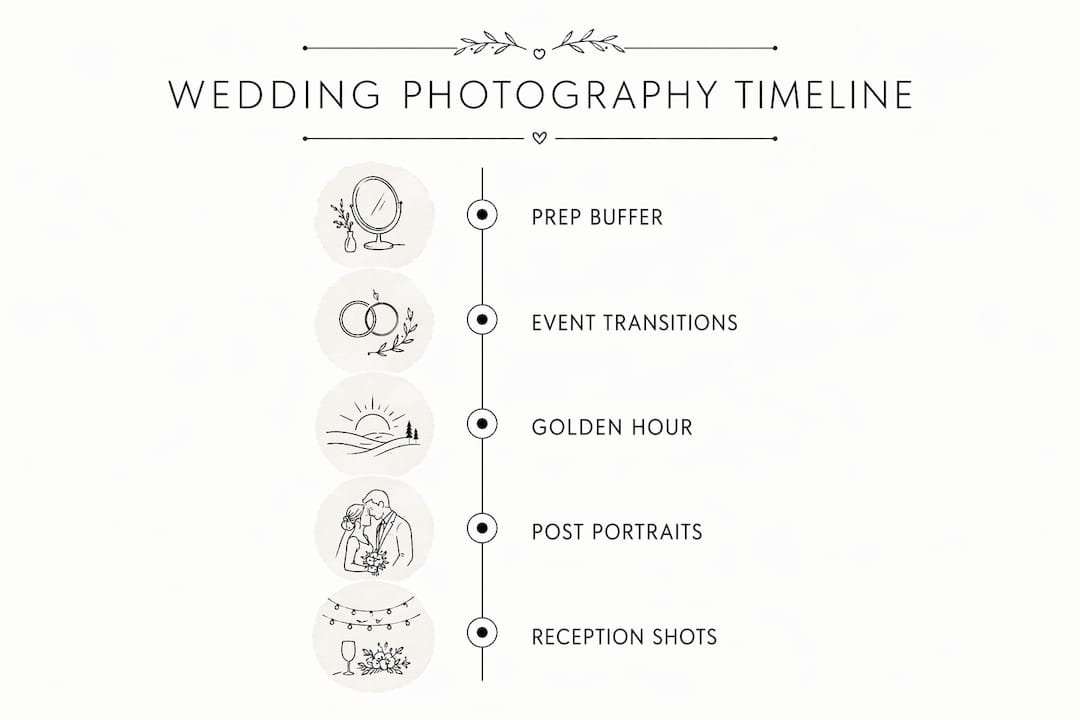
The standard recommendation is 15–20 minutes of buffer between every major transition. That includes the move from getting ready to first look, from ceremony to cocktail hour, and from cocktail hour to portraits. Each transition carries its own friction: parking, walking, gathering the wedding party, and quick touch-ups all eat time that couples rarely account for.
Hair and makeup deserve special attention in the schedule. Hair and makeup teams should finish 30–45 minutes before the photographer needs the couple dressed and ready. When makeup runs long, it compresses every subsequent block. The photographer loses getting-ready shots, the couple loses calm time before the ceremony, and the entire day starts behind schedule.
- Add 10–20 minutes for location changes, even when the distance looks short on a map.
- Build a buffer before the portrait session specifically to absorb ceremony overruns.
- Treat the "ready by" time as a hard deadline, not a suggestion. Late readiness compresses photography sessions and reduces photo quality directly.
- Communicate buffer blocks to all vendors in writing so no one schedules activities inside them.
Pro Tip: Share a version of your timeline with your wedding party that shows "ready by" times 15 minutes earlier than the actual schedule. It accounts for the inevitable slow movers without stress.
A 15–20 minute buffer before golden hour is the single most protective step a couple can take. It guarantees that even a delayed cocktail hour does not cost them the best light of the day.
What timing techniques capture authentic emotions on a wedding day?
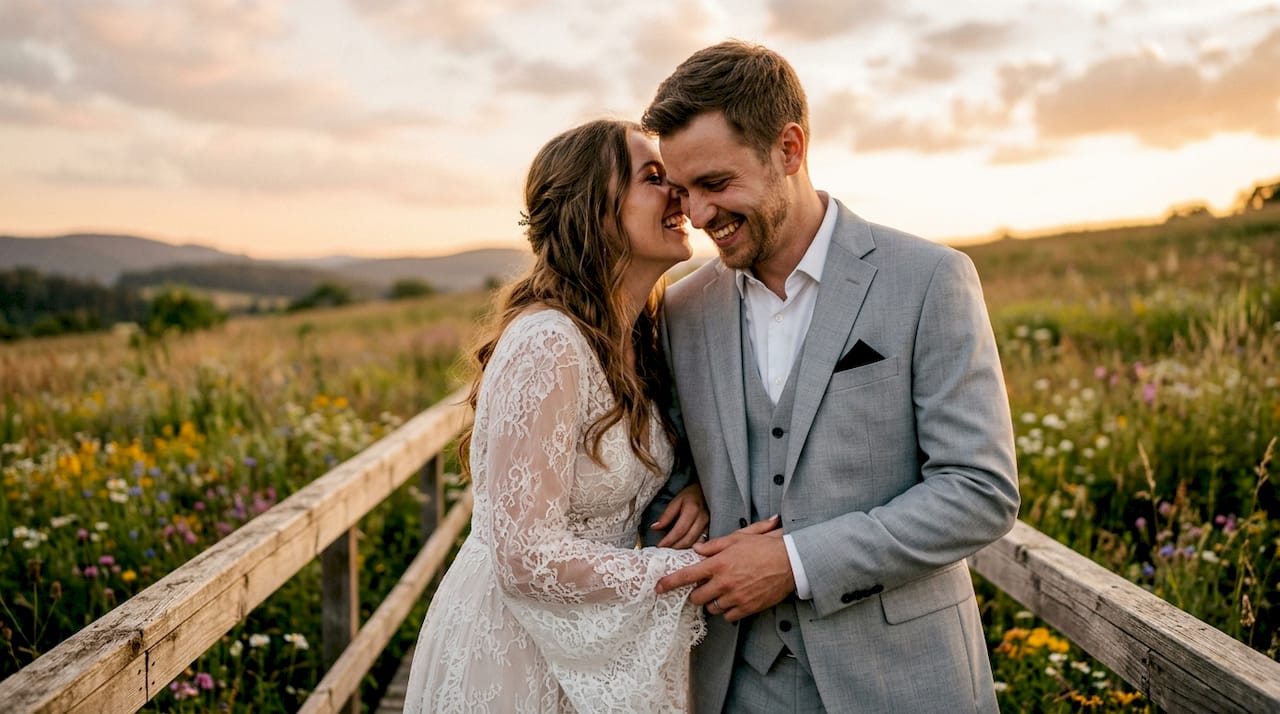
Authentic emotion in wedding photos comes from couples who feel relaxed, not rushed. The scheduling choices made weeks before the wedding directly determine whether couples feel present during portraits or anxious about the next item on the agenda.
The most effective technique is framing portrait time around the couple's experience rather than the photographer's needs. Instead of saying "we need 45 minutes for portraits," a photographer says "we're going to take you somewhere beautiful to watch the sunset together." That framing shifts the couple's mindset from obligation to experience. The photos that result are genuinely different.
Treating portrait time as a fixed, protected priority rather than a flexible buffer is the difference between rushed photos and images that feel timeless. Couples who guard that block on their timeline consistently walk away with their favorite photos of the day.
Scheduling a first look before the ceremony also changes the emotional tone of portrait sessions. When couples have already seen each other and shared a private moment, the post-ceremony portraits feel celebratory rather than tense. The photojournalistic approach to candid wedding shots works best when couples are relaxed enough to forget the camera is there.
- Schedule the first look in a quiet location away from guests to protect the intimacy of the moment.
- Limit posed shots during golden hour. Use simple, natural directions like "walk toward the light" or "lean in and talk to each other."
- Build unstructured time into the portrait block so candid moments can emerge between setups.
- Avoid back-to-back formal group shots during golden hour. Save those for earlier in the day when light is less critical.
The storytelling quality of wedding photography depends on moments that feel real. Timing creates the conditions for those moments. No amount of posing skill compensates for a couple who is stressed, rushed, or distracted by a schedule that is already behind.
How does the first look decision affect your photography timeline?
The choice between a first look and a traditional reveal at the altar reshapes the entire photography schedule. Both approaches work beautifully. The difference is where the portrait time sits and how much pressure falls on each block.
A first look shifts portraits before the ceremony. The couple sees each other privately, completes most formal portraits, and walks into the ceremony already calm and connected. First look weddings allow a more relaxed cocktail hour because the bulk of portrait work is already done. Post-ceremony time becomes available for candid reception coverage rather than rushed formals.
A no-first-look timeline keeps the reveal for the altar, which carries its own emotional power. The trade-off is that all formal portraits happen after the ceremony, when energy is high but time is tight. Post-ceremony portrait blocks must be carefully protected in a no-first-look timeline, with hard stops built in to prevent cocktail hour from bleeding into portrait time.
| Factor | First look timeline | No first look timeline |
|---|---|---|
| Portrait timing | Before ceremony | After ceremony |
| Cocktail hour | More relaxed, couple present | Portraits compete with cocktail hour |
| Golden hour planning | Easier to protect | Requires stricter post-ceremony buffers |
| Emotional tone of portraits | Calm, intimate | Celebratory, high energy |
| Risk of rushing | Lower | Higher without firm buffers |
- If you choose no first look, build the timeline backward from golden hour and work with your planner to end the ceremony early enough for portraits.
- Communicate your choice to every vendor at least four weeks before the wedding so timelines align.
- Ask your photographer how they structure the wedding day timeline for each approach. Their experience with both will shape the recommendation that fits your day.
Neither choice is wrong. The right choice is the one that fits your priorities and is backed by a timeline built to protect it.
Key Takeaways
Timing is the foundation of great wedding photography. Couples who build their schedule around golden hour, add real buffers, and protect portrait time consistently get better photos and a calmer day.
| Point | Details |
|---|---|
| Golden hour is non-negotiable | Plan portraits around the 20–40 minute peak light window before sunset. |
| Buffers prevent cascade delays | Add 15–20 minutes between every major transition to absorb real-world delays. |
| Hair and makeup set the pace | Finish 30–45 minutes before photography starts to protect every subsequent block. |
| First look shifts the pressure | Moving portraits before the ceremony reduces post-ceremony rush and protects golden hour. |
| Portrait time is fixed, not flexible | Treat the portrait block as a hard commitment, not a buffer that other events can borrow. |
What 16 years of wedding days taught me about timing
After photographing more than 1,600 weddings, the pattern is clear. The couples who walk away with their favorite photos of the day are almost never the ones with the biggest budgets or the most elaborate venues. They are the ones who protected their timeline.
The most common mistake I see is treating portrait time as the block that gives when everything else runs long. It becomes the default sacrifice. The ceremony goes 10 minutes over, cocktail hour starts late, and suddenly the photographer has 20 minutes instead of 45. That is not a lighting problem or a skill problem. It is a planning problem.
The second mistake is building a timeline forward from the ceremony start without anchoring it to sunset. Couples set a 4:00 PM ceremony because it feels right, then discover that golden hour falls at 7:15 PM and cocktail hour runs until 7:00 PM. There is no portrait time left. Working backward from sunset first, then fitting the ceremony and reception around it, solves this completely.
My honest advice: trust your photographer's timeline recommendations. They have seen what happens when buffers are skipped. They know how long group formals actually take versus how long couples think they take. The investment in professional wedding photography pays off most when the schedule is built to let the photographer do their best work.
— Atavia
How Ataviaweddings helps you plan a timeline that works
Ataviaweddings brings over 16 years of experience to every wedding day timeline it helps build. That experience means knowing exactly how long each photography block needs, where buffers are critical, and how to anchor the entire schedule to golden hour without disrupting the flow of the day.

Every couple who works with Ataviaweddings gets a photography timeline built around their specific venue, sunset time, and priorities. Whether you are planning a first look or a traditional reveal, the schedule is designed to protect the moments that matter most. Ataviaweddings' wedding photography and videography services include timeline consultation as part of the process, so nothing is left to chance. Reach out to start building a schedule that gives your photographer the conditions to capture your day at its best.
FAQ
What is the best time for wedding portraits?
The best time for wedding portraits is during golden hour, the 60-minute window before sunset, when light is warm, soft, and flattering. Plan to begin portraits 15 minutes before golden hour starts to capture the full peak window.
How much buffer time should a wedding photography timeline include?
Build 15–20 minutes of buffer between every major transition, and add 30–45 minutes after hair and makeup before photography begins. These buffers prevent delays from compressing portrait time.
Does a first look really improve wedding photos?
A first look shifts portraits before the ceremony, which reduces post-ceremony pressure and makes golden hour easier to protect. Couples who do a first look typically have more relaxed, intimate portrait sessions.
What happens if golden hour is lost to bad weather?
Overcast skies produce soft, diffused light that is genuinely flattering for portraits and works as a strong alternative to golden hour. Indoor window light is another option your photographer can use if outdoor conditions are poor.
How does timing affect candid wedding shots?
Candid shots require couples who feel relaxed and unhurried. A well-buffered timeline with protected portrait blocks gives couples the mental space to be present, which is when the most authentic emotional moments appear naturally.
Recommended
Planning your wedding?
Atavia films and photographs weddings nationwide — local teams, no travel fees, and a $500 deposit reserves your date.
Reserve Your Date